


She was born from a transaction.
A woman paid a witch for a barleycorn. Planted it. A flower bloomed.
And inside: a girl. Tiny. Perfect. Thumb-sized.
From the moment she exists, every creature who sees her asks the same question:
Can I keep her?
Not: Who is she?
Not: What does she want?
Not even: What is her name?
Just: Can she be mine?
That’s the entire story.
A girl constructed to be small enough to possess.
And a world that mistakes possession for love.
⚠️ Trigger Warning
This essay discusses romantic objectification, bodily autonomy, coercion, and the structural violence embedded in narratives of romance. It examines how fairy tales - and the cultural machinery around Valentine’s Day - teach that being chosen is the same as being free.
If you’re navigating relationship harm, coercion, or pressure around romantic expectations, please read with care.
Tomorrow is Valentine’s Day.
The holiday built on the premise that love is best expressed through consumption.
Flowers. Chocolate. Jewellery. Reservations. Expectations.
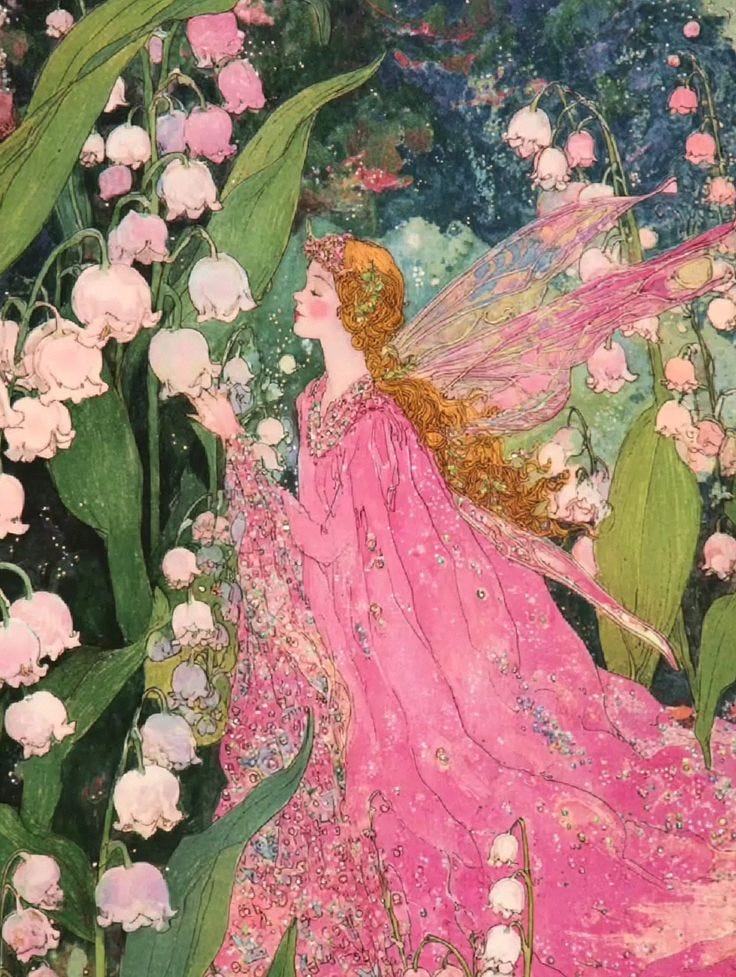
And beneath it all:
the quiet understanding that women are the ones being given, chosen, claimed.
That romance is something that happens to you - not something you author.
That being desired is the highest achievement.
That smallness - literal or social - makes you worthy of love.
Thumbelina could be the origin story for this.
She doesn’t just encounter romantic objectification.
She is constructed through it.
Her entire existence is predicated on being small enough, beautiful enough, delicate enough to be kept.
And the story never questions whether being kept is the problem.
It only questions who gets to keep her.
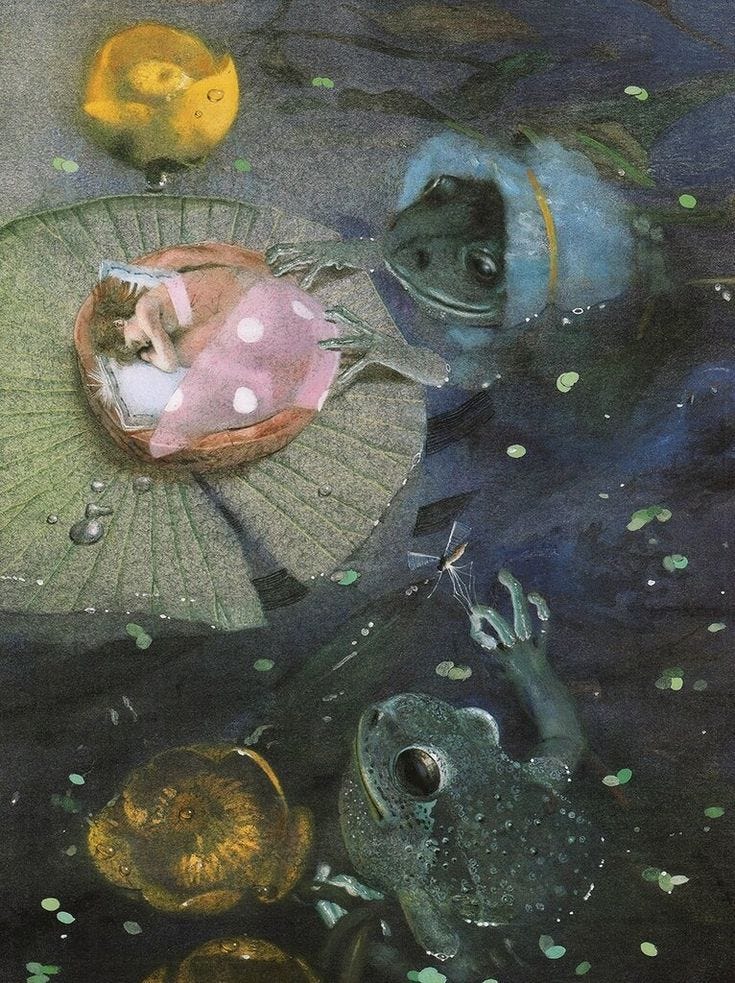
The First Suitor: The Toad
A toad sees Thumbelina sleeping in her walnut shell.
She thinks: What a pretty wife she would make for my son.
So she kidnaps her.
Puts her on a lily pad in the middle of a stream so she can’t escape.
Tells her son: This is your bride.
The story calls this a “terrible” fate - but not because it’s non-consensual.
Because toads are ugly.
The violation in the story isn’t the logical violation - kidnapping.
It’s the aesthetic mismatch.
This is where the lie begins: that the problem with forced marriage is the wrong suitor - not the force.
That a woman’s terror is justified only when the man isn’t handsome enough.
The fish take pity on her and gnaw through the lily pad so she can float away.
She escapes - but not through her own power.
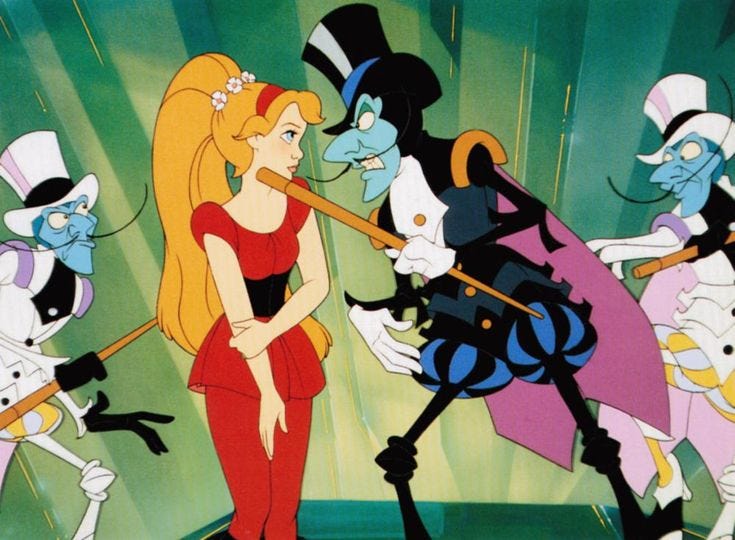
The Second Suitor: The Beetles
A beetle sees her drifting by. He finds her beautiful.
So he grabs her.
Carries her into a tree.
Tells her she’s lovely.
Then his friends arrive. They look at her with their antennae and say: She only has two legs. She has no feelers. She’s so thin in the waist. She looks almost like a human - how ugly.
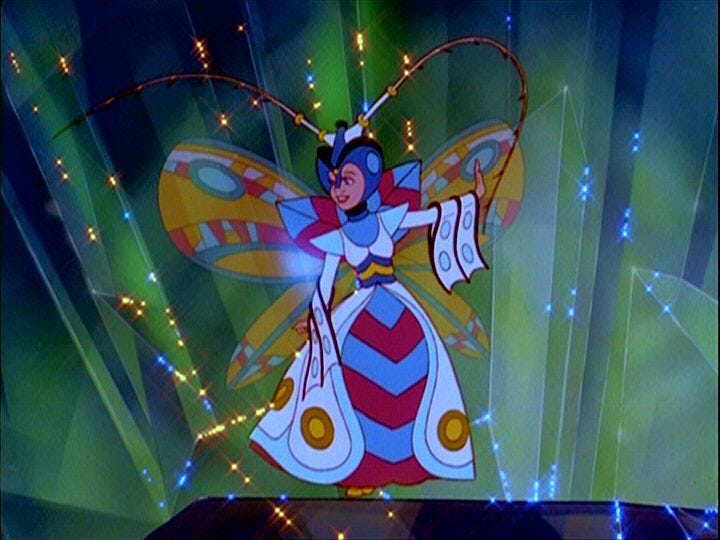
(In the movie adaptation they even dress her up to fit in.. aesthetic compliance strikes once again.)
So the beetle who took her - who called her beautiful moments before - abandons her.
She is discarded because she fails a beauty standard she never agreed to.
Being wanted wasn’t about her.
It was about consensus.
She was a trophy until she wasn’t.
This is Valentine’s Day logic: that your worth is determined by whether someone else desires you. That rejection isn’t about incompatibility - it’s about failure.
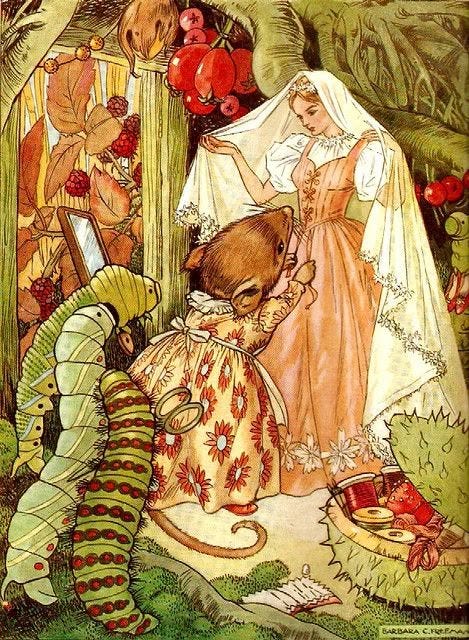
The Interlude: The Field Mouse
Thumbelina spends the summer and autumn alone in the forest. Cold. Starving. Exhausted.
A field mouse takes her in. Gives her shelter.
And immediately starts arranging her marriage.
The field mouse has a neighbour - a mole.
Wealthy. Educated. Owns a massive underground home.
He’s also blind.
Hates the sun.
Killed a swallow and left it rotting in his tunnel.
But he’s rich.
And the field mouse insists. The mole insists. The wedding is planned.
What the story normalises here:
That a woman’s resistance doesn’t matter if the match is practical.
That marriage is an economic arrangement, and she should be grateful someone wants her at all.
The mole doesn’t love her. He doesn’t know her.
He wants a wife because that’s what wealthy men acquire.
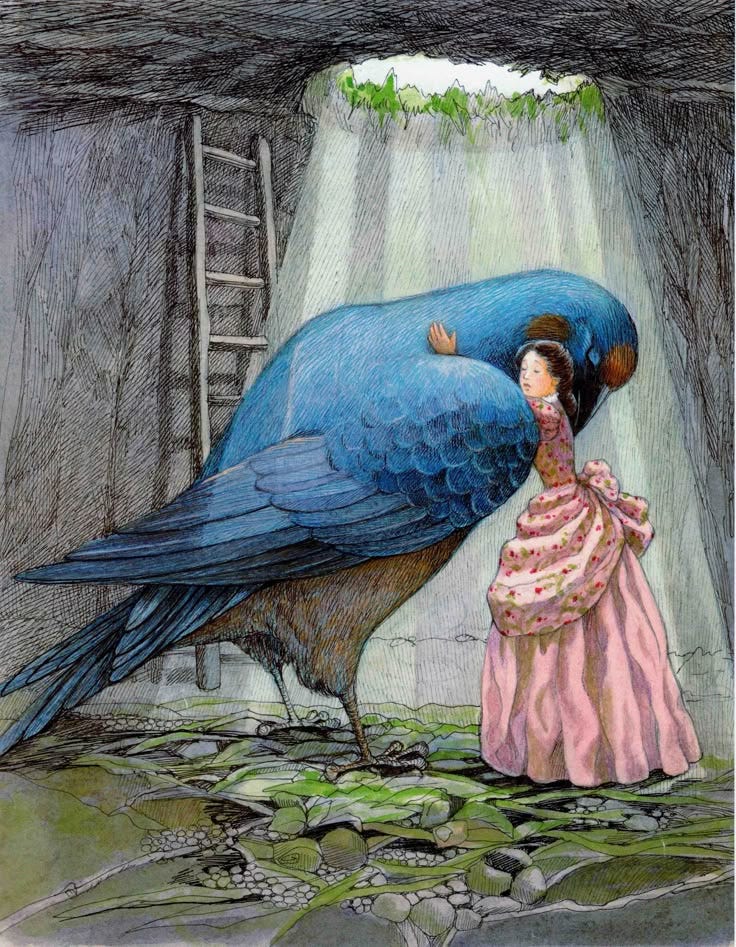
And then there is the one who didn’t claim her: The Swallow - or most of you likely know him as Jacquimo
While she’s trapped underground, preparing for a marriage she doesn’t want, Thumbelina finds the swallow the mole killed.
Except he’s not dead. He’s injured.
She nurses him back to health. Brings him food. Keeps him warm. They talk. They are friends.
When spring comes, he offers to take her away.
She says no - she feels obligated.
She chooses duty over desire.
Obligation over autonomy.
Because that’s what girls are taught: that leaving is selfish. That wanting something different is ungrateful.
That you owe your body to the people who sheltered you.
Later, on the day of her wedding, the swallow returns. This time, she says yes. He carries her away - finally, she escapes.
And here’s what’s devastating:
The swallow is the only creature in the entire story who offers her freedom without ownership.
He doesn’t want to marry her.
He doesn’t want to keep her.
He just wants her to be free.
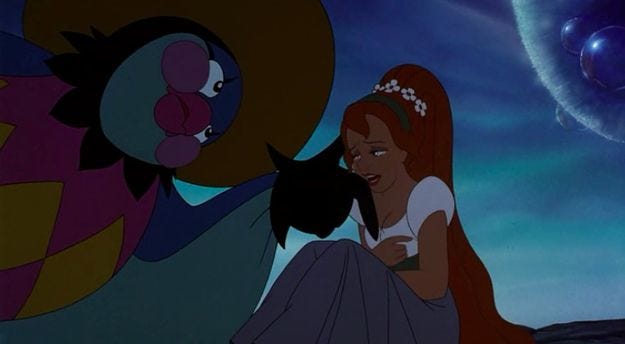
(He loves her - platonic or not - unconditionally)
And she doesn’t end up with him.
Let’s close the loop: the Final Suitor. The Flower Prince
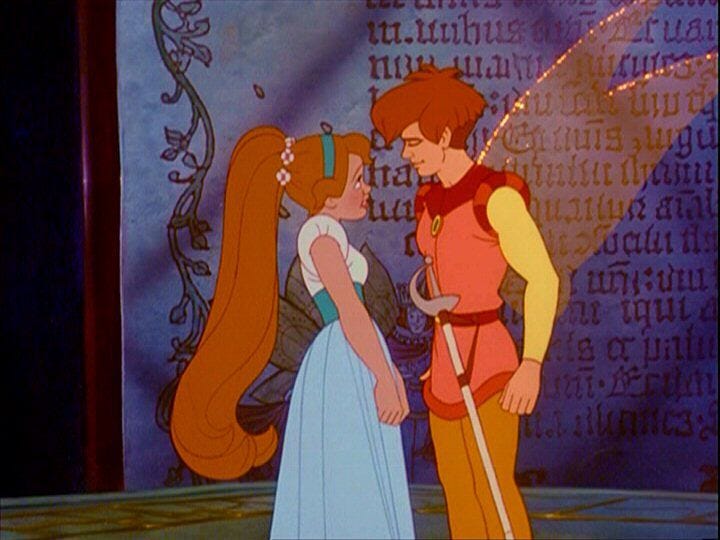
In the movie adaptation, before Thumbelina get’s kidnapped, she dreams of belonging.. of finding someone like her. So she meets the flower prince Cornelius. And it’s love at first sight. The fairy prince.
After being saved by the swallow - Jacquimo brings her to her prince.
In the original story, the swallow brings her to a warm country. He sets her down in a flower.
And inside that flower: a tiny prince. Beautiful. Wearing a golden crown.
He sees her and immediately asks her to marry him.
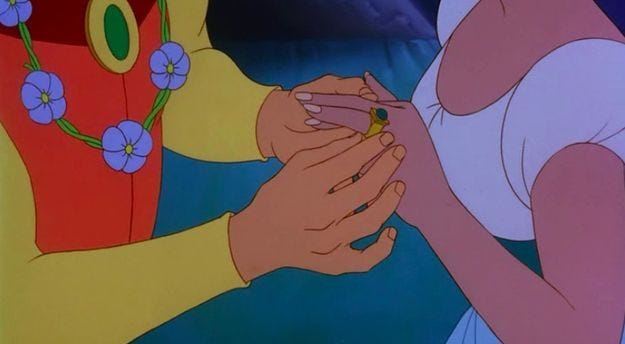
She says yes.
Happy ever after?
The story ends here.
She’s finally with someone beautiful. Someone her size. Someone who gives her a crown and wings and a new name.
The narrative calls this a happy ending.
But let’s be clear about what just happened:
She escaped forced marriage with a mole - and immediately accepted a marriage proposal from a man she just met.
She rejected life underground - but she still ends up in a flower. Still small. Still decorative.
She gains wings - but only because a man gives them to her.
She is still chosen, not choosing.
And the story celebrates this as liberation.
A painful truth emerged for me.. that there is violence of “belonging”.
She’s been rejected by toads, beetles, moles - all too different.
But the flower prince? He’s her size. Her kind. Her species.
Finally, she fits.
And the story frames this as the happy resolution.
But let’s name what’s actually happening:
She’s been so starved for acceptance - so exhausted from being othered, rejected, told she’s too small, too strange, too different - that when someone finally doesn’t see her as alien, she mistakes that relief for love.
Her joy at belonging gets confused with consent to marriage.
And the story calls this romance.
I call this the double bind.
It is the trap the fairy tale sets - and it’s the same trap marginalised people face in real life:
She’s denied autonomy through forced marriage (the toad, the mole).
AND she’s denied belonging through segregation (the beetles reject her, she’s too different for everyone).
So when she finally meets the flower prince, she can’t separate:
“I finally found someone who doesn’t see me as broken”
from
“I finally found someone who wants to marry me.”
She never gets to experience belonging without partnership.
She never gets to just exist - as herself, in community - without immediately being claimed.
Yes, the flower kingdom is beautiful.
It’s full of creatures her size.
People who understand her.
A place where she’s not othered.
It’s a refuge.
And her relief at finding it is real and valid.
But the story never questions why she needed refuge in the first place.
It never asks: Who decided she doesn’t belong with anyone different from her?
It never challenges: Why is difference treated as incompatibility?
Instead, it naturalises segregation.
It says: Of course she belongs with her own kind. Of course she should marry within her species. Of course she’s happier with people who look like her.
This is the logic of racial endogamy. Of ableist segregation. Of “stay with your own kind.”
And the fairy tale presents it as happy ending.
And there is a real-life parallel to be drawn - as always…
When you’ve been marginalised - when you’ve been told you’re too much or not enough, when you’ve been rejected for being disabled, fat, queer, trans, Black, brown, neurodivergent, poor - finally finding your people is profound.
Finding community that sees you, that doesn’t other you, that lets you breathe without explanation-
That belonging is survival.
But here’s where it gets complicated:
If that community then replicates the same power dynamics-
If it polices who “really” belongs-
If it pressures you to partner within the community-
If it conflates acceptance with romantic availability-
The refuge becomes another site of control.
And when you’ve been starved for belonging, it’s almost impossible to critique the community that finally accepts you.
Because what if they reject you too?
What if you’re too critical, too difficult, too much - even here?
So you stay quiet.
You accept the marriage proposal.
You mistake relief for love.
You tell yourself: This is what I wanted. This is where I belong.
Did she marry him because she loved him?
Or because he was the first person who made her feel like she wasn’t broken -
And she couldn’t risk losing that feeling?
The story doesn’t let us ask that question.
Because the story needs us to believe that finding “your kind” resolves everything.
That belonging and partnership are the same thing.
That a woman who finally fits doesn’t need autonomy - she needs a crown (or wings).
But here’s the truth the fairy tale won’t say:
She never gets to find out who she is outside of being rejected or being claimed.
She goes from “you don’t belong here” to “you belong to me” without ever getting to belong to herself.
She never gets to experience acceptance without marriage.
She never gets to live in community without immediately being partnered off.
She never gets to be small, and strange, and different-
And still be free.
So what does Thumbelina teach us about Valentine’s Day?
Valentine’s Day is the cultural performance of this exact lie:
That being desired is empowerment.
That being chosen is agency.
That the right relationship will save you from the wrong ones - as if the cage ever mattered less than the fact that it’s a cage.
And the numbers prove how deeply this story has embedded itself:
Research shows that women report feeling significant pressure around Valentine’s Day to prove relationship status, with single women experiencing measurable increases in anxiety and self-worth questioning in the weeks leading up to February 14th.
Studies on romantic relationships consistently find that women who’ve experienced isolation or marginalisation are statistically more likely to remain in relationships that don’t serve them - because the fear of being alone again, of being othered again, outweighs the harm of staying.
This is Thumbelina’s bind, documented in data:
When you’ve been rejected enough times, acceptance becomes irresistible - even when it comes with conditions you didn’t choose.
We’re taught to invest in being want-able. Being small enough, beautiful enough, pleasant enough to be chosen.
We’re taught that rejection is failure. That being single on Valentine’s Day is evidence of inadequacy.
We’re taught that romance is the highest achievement - that a woman without a partner is incomplete.
And we’re taught that our autonomy is less important than being kept.
Thumbelina rejects the toad, the beetles, the mole.
But she never rejects the premise that marriage is her destiny.
She never asks: What if I don’t want to be kept at all?
What the story won’t say
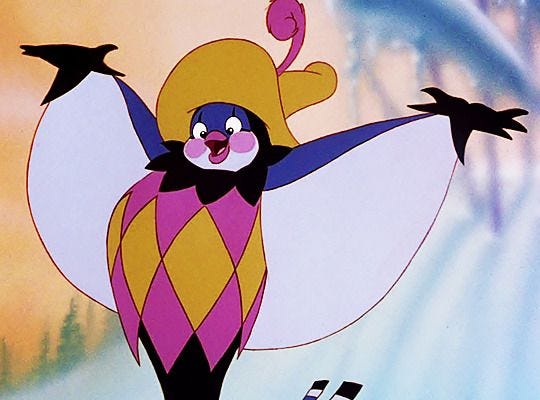
The swallow flies away at the end.
The one relationship that wasn’t transactional. The one that was unconditional.
The one creature who respected her autonomy.
He doesn’t get the ending.
Because the fairy tale can’t imagine a woman who doesn’t end up married.
It can’t imagine freedom that doesn’t resolve into partnership.
It can’t imagine that a woman might want the sky - and nothing else.
And this is the structural violence Valentine’s Day perpetuates:
That women exist to be chosen (or taken, promised, gifted).
That romance is the pinnacle of female achievement.
That autonomy is loneliness, and partnership is safety.
That wanting something other than love makes you broken.
Now.. what do we do with this?
If you feel pressure tomorrow - to perform romance, to prove you’re chosen, to demonstrate your worth through relationship status-
That pressure isn’t coming from inside you.
It’s coming from a story you were sold before you could even read.
A story that says your body is most valuable when it’s small enough to keep.
That your worth is determined by who wants you.
That being chosen is the same as being free.
It’s not.
You are not a flower someone plants and owns.
You are not a prize to be passed between suitors.
You are not required to shrink yourself to be lovable.
And you are not incomplete without someone to keep you.
If your body, mind and heart is rejecting this holiday:
You are not overreacting.
You are not too sensitive.
You are not broken because this holiday makes you feel trapped.
You are seeing clearly in a culture that wants you compliant.
Tomorrow, the world will sell you flowers and chocolate and the promise that being wanted is enough (overpriced on top - but that is a story for another time).
It’s not.
You deserve more than being kept.
You deserve the sky.
You are exactly the size you need to be.
And no one gets to keep you but you.
I’ll see you next Friday.
Until then-
Stay loud. Stay resolutely you. Stay your own.
– Jen
‼️ If You Need Support ‼️
If this piece surfaced anything painful around romantic pressure, coercion, or relationship harm, please know: you deserve support, not silence.
Crisis & Emotional Support
Crisis Text Line (US/UK/CA): Text HOME to 741741
Samaritans (UK): Call 116 123 – 24/7 free support
Mind (UK): https://www.mind.org.uk
Domestic & Relationship Abuse
National Domestic Violence Hotline (US): 1-800-799-SAFE (7233)
Refuge (UK): 0808 2000 247 – 24/7 support
Women’s Aid (UK): https://www.womensaid.org.uk
Sexual Assault & Coercion
RAINN (US): 1-800-656-HOPE (4673)
Rape Crisis (UK): 0808 500 2222
The Survivors Trust (UK): https://www.thesurvivorstrust.org
General Support
Victim Support (UK): https://www.victimsupport.org.uk
Lifeline (Australia): 13 11 14
You are not overreacting.
Your instincts are protecting you.
You deserve autonomy, safety, and freedom.